Decontamination is like exfoliation for car paint
Our Paint Decontamination service in Cape Town prioritises the safe removal of paint contaminants to restores a smooth and clean surface.

What Is Contamination?
Anything that doesn’t wash off with a normal car wash routine, i.e. shampoo, hand washing and high pressure, is considered paint surface contamination. It can also be referred to as bonded contamination.
To remove these bonded particles we need to do a Decontamination process. Think of it like exfoliation but for your car’s paint. We use physical clay treatments and specific chemical removers to lift these contaminants away. The removal process may scratch the paint and this would require and appropriate level of polishing.
Common Contaminants We Can Remove
We’ve seen just about everything stuck to car paint over the years. The following however are the usual suspects we deal with most often:
Industrial Fallout – “rust specks”
Those tiny brown or orange rusty spots you notice on your paint, especially on lighter coloured cars, comes from industrial pollution typically brake dust from your car and railway lines, and any area where metal particles are in the air. It could be somebody welding and grinding a gate or car body shop or even a metal scrapyard.
These spots aren’t just unsightly they’re actively corroding and breaking your clear coat.
To note: Insect droppings can look similar and are equally corrosive.

Tar
Road tar gets flicked up onto your cars paint either during hot weather or because of roadworks.
It’s easiest to remove it before it hardens onto the paint surface. The longer it sits, the more difficult it becomes to remove without the right chemicals.
Typical treatment is with a tar and adhesive remover and washing if its still soft. Clay and an appropriate level of Polishing would be required additionally if its hardened.


Water Spots, Mineral Deposits and LimeScale
Mineral deposits is left behind when water evaporates off your paint or glass into spots, streaks, lines etc. This can happen to raw paint, ceramic coatings and PPF.
Tap water, well or borehole water, rain, and cement runoff, like basement parking, balconies or any concrete/cement structure, all leave different types of marking. These minerals can etch into the clear coat, especially on resprayed panels and certain car makes like BMW and Jetour.
In Cape Town we experience rain and hot sun on the same day. This type of environment also increases the likelihood of spotting and etching.
Typical removal is with chemical before polishing. Polishing immediately can push it deeper!
Adhesive Residue and Glue
Sticker and decal residue, old badges, double-sided tape, and vinyl adhesive that wasn’t removed properly can typically be removed with a chemical tar and adhesive remover and in heavy cases require solvents.
Care must always be taken so testing in an innocuous spot is important assolvent can damage paint or surrounding trim, so correct identification matters.
Polishing is often necessary to remove the “shadow or imprint” of where stickers etc were.

Paint Overspray and Splatter
Overspray is a fine mist from spray painting either a car or building and even from road marking work. You might not notice it immediately ot it may not be visible, but your paint feels rough and looks slightly dull.
Paint splatter is typically from painting buildings or driving through a spill.
Removal is typically clay bar and chemical remover. As the paint overspray and splatter is removed it drags over the paint and creates swirling or scratches, because of this, an appropriate level of paint correction polishing would be required.

Cement Splatter
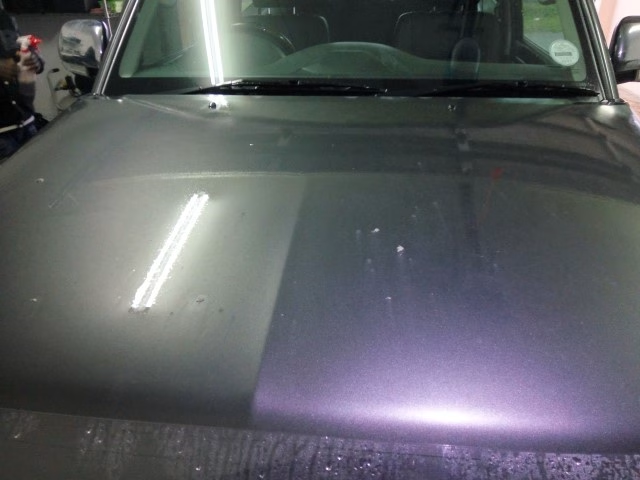
Wherever construction happens there will be cement or concrete. Cement and concrete splatter hardens quickly and can cause permanent etching if not treated.
Removal requires an acid-based chemical treatment followed by clay barring. We take extra care around black textured plastic trim, as certain acids can cause discolouration on cheaper trim pieces.
An appropriate level of paint correction polishing will likely be required.
How much does it Cost? / I Don’t know what’s on my paint
When it comes to decontamination, if not most car detailing services, it’s difficult to give a price without seeing the car first. In regards to contamination, we need to physically look at the car and identify what’s on the paint and test to determine what products, processes and time will be needed to remove it.
We offer a free visual inspection at our premises in Lansdowne, Southern Suburbs, Cape Town. In many cases, this is enough to identify the problem but not quote on. If testing is required to confirm the contamination and provide an accurate quotation, a R350 assessment fee applies.
Contact us to arrange an inspection.